


If owning a boat has been something you’ve talked about for years, this might be the year to make it happen.
Maybe you’ve imagined spending weekends cruising with family, fishing along the Gulf Coast, finding your favorite sandbar or simply enjoying more time outdoors. Whatever your reason, buying your first boat is an exciting step toward creating more opportunities to enjoy the water.
But if you’ve never owned a boat before, knowing where to start can feel a little overwhelming. Between choosing the right style, understanding your budget, exploring financing and figuring out storage, there are several things to consider before making a purchase.
The good news? You don’t have to figure everything out at once.
With a little planning and guidance, the boat-buying process can be much more approachable. Here’s a step-by-step road map to help you go from dreaming about boat ownership to getting out on the water.
Step 1: Determine How You Want to Spend Your Time on the Water
Before looking at specific boats, start by thinking about how you plan to use yours.
Your boating lifestyle should be the biggest influence on the type of boat you choose. A family that loves cruising and entertaining will likely have different needs than someone who spends most weekends fishing offshore.
- Will you primarily cruise, fish, swim or participate in watersports?
- How many people will typically be aboard?
- Will you regularly bring friends or extended family?
- Do you plan to stay close to shore or explore farther offshore?
- Will you spend a few hours on the water or plan full-day outings?
- Do you want a boat that can accommodate several different activities?
You don’t need to have every detail figured out, but identifying your primary activities will help narrow your options.
Step 2: Explore Different Types of Boats
Once you have a better understanding of your boating lifestyle, it’s time to explore the different styles of boats available.
Sunrise Marine carries several brands that offer options for different boating preferences.
If your ideal day involves relaxing cruises, entertaining friends and spending time with family, a pontoon may be a great place to start.
Bennington and Premier offer pontoon options with spacious seating arrangements and layouts designed around comfort and enjoying time together. Depending on the model and configuration, you can explore features such as entertainment areas, upgraded seating and watersports capabilities.
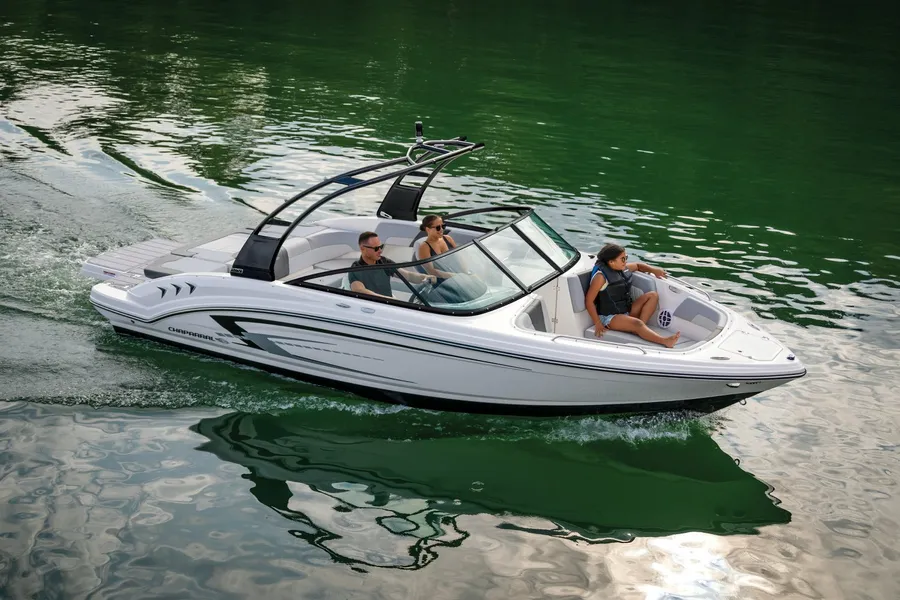
For buyers interested in cruising, swimming and watersports, Chaparral offers a range of recreational boats worth exploring.
With different styles and layouts available, you can compare options based on passenger capacity, seating, storage and the activities you enjoy most.
If fishing is high on your priority list but you still want flexibility for recreational outings, Robalo is worth considering.
Its center console and dual console offerings provide options for different fishing and family boating preferences. Depending on the model, you can explore fishing-focused features alongside comfortable passenger seating and storage.
For boaters interested in offshore fishing, coastal exploration and spending time on larger bodies of water, World Cat offers power catamaran options.
Its twin-hull designs provide a different approach to space, stability and performance, making it a brand worth exploring for buyers with specific boating needs.
The best way to narrow down your choices is to compare different styles, explore available models and step aboard whenever possible.
Step 3: Establish a Realistic Budget
Once you’ve identified the types of boats that interest you, it’s time to determine what fits comfortably within your budget.
The purchase price is an important starting point, but boat ownership involves additional expenses that should be considered before making a decision.
- Purchase price: Consider the cost of the boat, engine and any included equipment or upgrades.
- Financing: Explore available financing options, loan terms and monthly payments.
- Insurance: Get an insurance estimate based on the boat you’re considering and how you plan to use it.
- Registration and taxes: Account for applicable registration fees, taxes and other purchase-related expenses.
- Storage: Consider whether you’ll keep your boat at a marina, in dry storage or on a trailer at home.
- Maintenance: Plan for routine service, inspections, cleaning and ongoing upkeep.
- Fuel and accessories: Include fuel, safety equipment, electronics and other items that may be needed.
Having a realistic picture of the total cost of ownership will help you make a more confident decision and avoid surprises after taking delivery.
Step 4: Think About Storage and Where You’ll Keep Your Boat
Storage is one of the most important considerations for first-time boat owners, and it’s something worth figuring out before purchasing. Depending on the size and style of your boat, you may have several options.
If you have the appropriate space at home, trailer storage can offer flexibility and allow you to transport your boat to different waterways. Before choosing this option, consider whether you have enough room for the boat and trailer, whether your vehicle is properly equipped to tow it and whether you’re comfortable launching and retrieving the boat.
Keeping your boat at a marina can make getting out on the water more convenient. You’ll want to research slip availability, pricing, vessel size requirements and any additional marina services.
Some marinas offer dry storage options that keep boats out of the water when they’re not being used. Availability, vessel size limitations and launch arrangements will vary by facility.
Think about how frequently you plan to use your boat and which storage arrangement makes the most sense for your lifestyle.
Step 5: Explore Financing and the Purchase Process
If you plan to finance your boat, it’s helpful to understand your options early in the shopping process.
Start by establishing a comfortable monthly payment and exploring what financing terms may be available. Your credit profile, down payment, loan amount and financing terms can all influence your options.
- How much are you comfortable putting down?
- What monthly payment fits your budget?
- How long do you plan to keep the boat?
- Are you considering a new or pre-owned boat?
- Have you accounted for insurance and other ownership expenses?
Getting a better understanding of your financing options can help you shop confidently and focus on boats that make sense financially.
Your Sunrise Marine sales team can help guide you through the purchase process and connect you with the appropriate resources to explore financing options.
Step 6: Visit the Dealership and Step Aboard
Pictures and specifications are helpful, but nothing compares to seeing a boat in person.
Once you’ve narrowed down your options, schedule a dealership visit and take the opportunity to explore different models.
- How comfortable is the seating?
- Is there enough room for everyone?
- Does the layout make sense for your typical outings?
- Is there enough storage for your equipment and personal belongings?
- Can everyone comfortably move around the boat?
- Are the controls and electronics easy to understand?
- Does the boat offer the features you identified as priorities?
Don’t hesitate to ask questions or compare multiple models. A boat that looks perfect online may feel different once you step aboard.
This is also a great time to discuss available inventory, model configurations, optional equipment and any additional features you may want.
Step 7: Prepare for Delivery and Your First Day on the Water
Once you’ve found the right boat and completed the purchase process, the excitement really begins.
Before taking delivery, make sure you understand the important details of operating and maintaining your new boat.
- Starting, operating and shutting down your engine.
- Basic controls and onboard electronics.
- Navigation equipment and safety systems.
- Fueling procedures and recommended maintenance.
- Anchoring and docking basics.
- Recommended service intervals and warranty information.
If you’re purchasing your first boat, don’t feel like you need to know everything on day one. Take your time, ask questions and become comfortable with the equipment before heading out independently.
It’s also worth reviewing applicable boating education requirements and completing an approved boating safety course if you haven’t already.
The more familiar you are with your boat before your first outing, the more confident you’ll feel once you’re underway.
Step 8: Plan Your First Year of Boating
Buying a boat is just the beginning. The real reward comes from all the experiences you’ll enjoy afterward.
As you get started, think about what you’d like your first year of ownership to look like.
Maybe it’s exploring new waterfront restaurants, taking the family to the sandbar, spending more weekends fishing or discovering new places along the Gulf Coast.
Make a list of destinations you’d like to visit, activities you want to try and experiences you want to share with family and friends.
And remember that regular maintenance is part of responsible boat ownership. Staying current on recommended service and addressing small issues early can help keep your boat ready for the next adventure.
Your First Boat Is Closer Than You Think
Getting into boat ownership doesn’t have to be complicated. By understanding your boating lifestyle, establishing a realistic budget, exploring different boat styles and planning for storage and maintenance, you can approach the process one step at a time.
Whether you’re drawn to the comfort of a Bennington or Premier pontoon, the versatility of a Chaparral, the fishing capabilities of a Robalo or the offshore performance of a World Cat, Sunrise Marine has options to help you find a boat that fits your plans.
You don’t need to have every answer before you start shopping. Sometimes the best first step is simply having a conversation.
Make This the Year You Get on the Water
Talk with the Sunrise Marine team to explore your options, ask questions and take the first step toward boat ownership.